
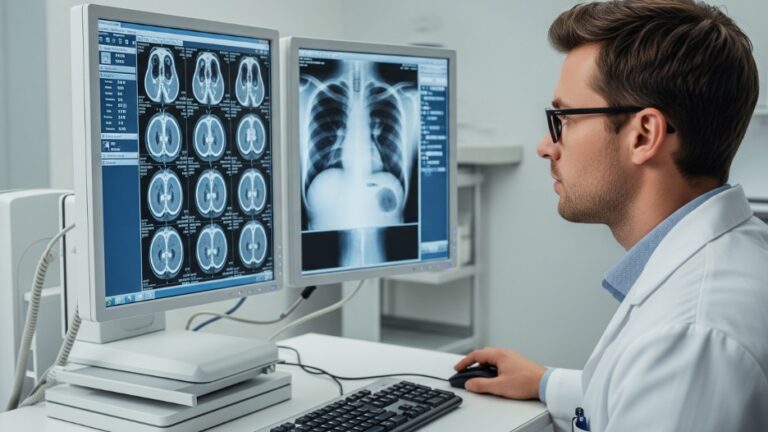
Radiology is one of the fastest-growing areas in healthcare. Hospitals, clinics, and imaging centers hire trained technicians every day. Many people want to enter this field but need flexible learning options. That’s why many students take Radiology classes online. But a common question remains. Can an online class give real hands-on experience with patients and imaging machines?
Role of Radiology Training

Radiology technicians help doctors see what’s going on inside the body. They take X-rays, run imaging tests, and make sure patients stay safe during each procedure. To do this work well, students need two things: knowledge and practice. Books and lectures help with theory, but the real challenge begins when standing beside a patient and handling a heavy machine. This way, students enjoy flexible schedules without losing the hands-on part that builds career readiness.
Strengths of Online Classes
Online programs give students a way to study without leaving home. Some clear benefits include:
- Flexible schedules for people with jobs or family duties
- Recorded lessons that students can review at any time
- Lower travel and living costs
- Direct online contact with teachers and classmates
This setup works well for students who want to study at their own pace.
Hands-On Requirement
Reading alone cannot prepare someone for radiology work. Students must practice real tasks, such as:
- Placing patients in the right position for X-rays
- Adjusting machine settings for clear results
- Following safety rules for radiation exposure
- Helping patients who feel nervous or scared
These skills need supervision and cannot be learned only from a computer screen. That is why strong programs include both online lessons and in-person training at approved medical sites.
Online Programs with Practice
Good schools use a mix of formats. The first part covers the theory online. Subjects often include:
- Human anatomy and physiology
- Radiographic procedures
- Equipment basics
- Patient care and ethics
After that, the student goes to a hospital or imaging center. There, under a certified professional, the student applies what was studied online. This mix of learning styles makes sure the student knows both theory and practice.
Classroom vs. Real Setting
The gap between theory and practice is clear.
- Online class: You learn about the parts of an X-ray machine.
- Real setting: You touch the machine, adjust controls, and check the results.
- Online class: You read about how to position a patient.
- Real setting: You guide the patient, move the arm gently, and capture a correct image.
By doing both, students leave school with knowledge in their heads and skills in their hands.
Skills Built During Clinical Work
Hands-on training shapes more than just technical ability. It helps students grow in other ways:
- Clear communication with patients
- Quick problem-solving when images do not look right
- Calm action under time pressure
- Careful use of safety steps
- Teamwork with nurses, doctors, and fellow technicians
These abilities only grow stronger through real practice.
Focus on Safety
Radiation safety is one of the most important parts of the job. Even small mistakes can put staff or patients at risk. Clinical work trains students to:
- Wear protective gear
- Set correct dose levels
- Keep a safe distance from radiation areas
- Check machine functions before every use
Patient Care as a Core Part
The job is not only about machines. It is about people who may feel sick, nervous, or in pain. Patient care is central to the role. Where online lessons give background, their real practice shows how to speak calmly to a worried patient. It shows how to:
- Help an older patient move safely onto a table
- Guide children or people with limited mobility
- Show empathy while still keeping the process smooth
Confidence for Work
Completing a program is one goal. Feeling ready to walk into a clinic or hospital is another. Students who combine online study with clinical sessions leave with:
- Confidence to operate machines
- Comfort when speaking to patients
- Skills they can use right away
Career Growth
Learning radiology can open the door to many roles. Some technicians specialize in CT, MRI, or mammography. Others go into leadership, education, or advanced imaging. People who want a healthcare career also look at fields such as medical assisting or laboratory work. Each of these areas mixes study with direct practice.
Final Thoughts
Radiology training works best when online theory is matched with real clinical experience. Radiology classes online give students confidence and make them ready for hospital or clinic jobs. Accredited programs that follow this model also gain trust from employers. For learners who want other healthcare options, the same structure applies. Paths like pharmacy technician training courses online also use flexible study with practical work. This gives graduates the tools to be successful.
For more articles, visit OD Blog.
