
My experience undertaking a placement-based master’s dissertation in Sierra Leone
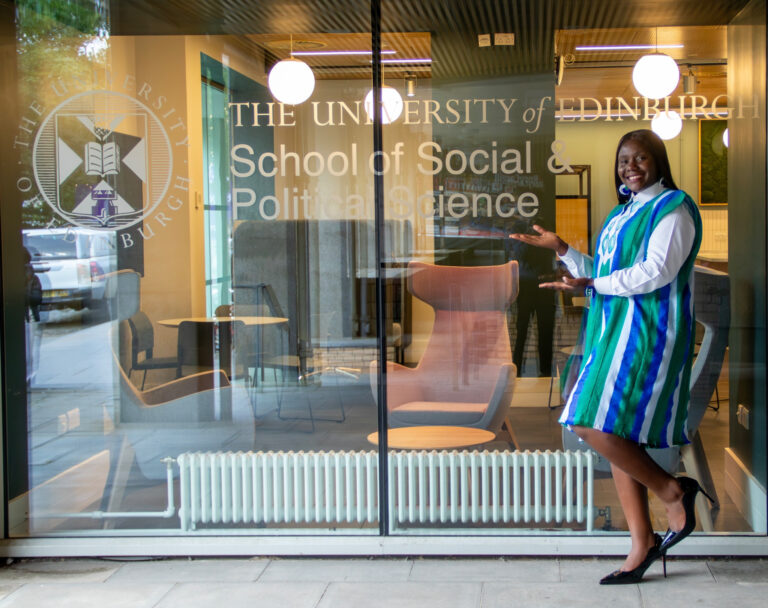
“I come as one, but I stand as ten thousand.” These words by Maya Angelou have been a lifelong mantra for me. They remind me that wherever I go, I carry the experiences, lessons and contributions of the people and communities who have shaped my journey. When I began my master’s degree in Africa and International Development at the University of Edinburgh, I knew I wanted my dissertation to be more than an academic exercise. I wanted to conduct research that connected my experience as a development practitioner with the theories, questions and debates I had encountered in the classroom. Before moving to Edinburgh, I had spent several years building and managing a non-profit organisation in Nigeria, working with teenage mothers and girls in marginalised communities. Through this work, I had experienced the opportunities that international development funding creates, but I had also encountered some of the pressures that accompany it. I had become increasingly interested in understanding how donor funding influences the decisions, priorities and independence of grassroots organisations. “Who determines what gets funded? How much freedom do local organisations have to pursue their own priorities? What happens when an organisation’s mission does not fit neatly within donor expectations?” These were questions I had encountered in practice, and I wanted to examine them more critically through research. That interest eventually took me to Sierra Leone, where I spent five weeks conducting fieldwork with Women Against Violence and Exploitation in Society (WAVES), a women’s rights organisation working to end female genital cutting (FGC). What began as a dissertation placement became one of the most important learning experiences of my postgraduate studies.
Finding the right organisation for my research
One of the first challenges was identifying an organisation whose work aligned with my research interests and securing an opportunity to undertake the placement. My organisation in Nigeria had previously partnered with the Global Fund for Children (GFC), whose approach to flexible funding had influenced my thinking about donor relationships and local organisational autonomy. When I began considering possible dissertation placements, I reached out to GFC, which introduced me to WAVES in Sierra Leone. Ame Atsu and Remijus Nwobi, GFC’s West Africa coordinators, were particularly helpful in facilitating communication and the necessary arrangements. WAVES was an appropriate organisation for my research because of its longstanding work addressing female genital cutting, its relationships with communities and its commitment to the complete abandonment of the practice. Its experience working with different funding partners also provided an opportunity to examine how donor expectations influence organisational decisions. My research focused on how donor funding structures shape the strategies and autonomy of grassroots organisations working towards the abandonment of FGC. However, securing the placement was only one part of the process. I also had to navigate academic deadlines, ethical approval procedures, travel risk assessments and university requirements. The process was demanding, particularly because my proposed research involved a sensitive issue and travel to a country where security considerations required additional attention. I submitted my project documents on the final day of the deadline, uncertain whether the necessary approvals would come through in time. The experience taught me an early lesson: “Conducting research outside the university requires considerable planning, patience and persistence.”
Arriving in Sierra Leone
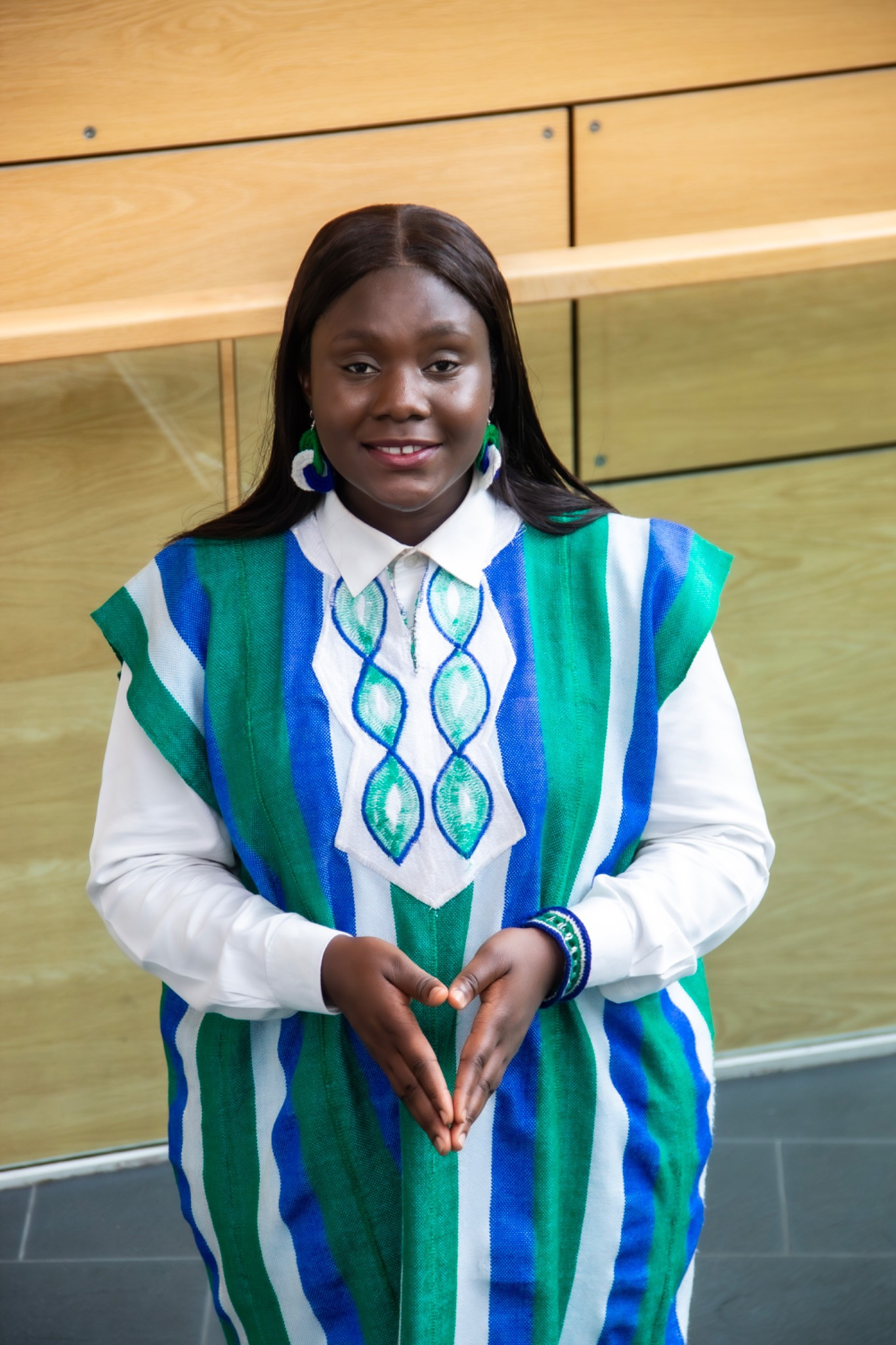
I arrived in Sierra Leone on 5 May 2026. My first two days were spent in Freetown before travelling to Bo, where WAVES had its main office. One of my earliest encounters was with a ferry operator who asked me in Krio, “Na usai yu de go?” meaning, “Where are you going?” Coming from Nigeria, I immediately recognised similarities between Krio and Nigerian Pidgin English. It was a small but memorable moment. The language felt familiar, yet I was conscious that I was entering a different country with its own histories, identities and social realities. Throughout my stay, I experienced this mixture of familiarity and difference. In Freetown, I visited We Are Purposeful, an African-rooted donor organisation located opposite my hotel. Our interaction introduced me to some of the complexities of funding women’s rights and child protection initiatives, including the ways African-rooted donor organisations remain connected to wider international funding systems. It was an interesting introduction to the questions I had travelled to Sierra Leone to investigate. After two days, I travelled to Bo to begin my placement with WAVES.
Learning from inside an organisation
One of the greatest advantages of my placement was the opportunity to observe organisational processes rather than relying entirely on interviews and published reports. At WAVES, I was welcomed into the organisation’s daily activities. I attended weekly staff briefings, reviewed strategic documents, examined programme reports and spent time understanding how the organisation planned and implemented its interventions. I was given a workspace near the programmes office, which allowed me to interact with staff and observe aspects of their everyday work. These experiences gave me a perspective I might not have gained through remote interviews alone. I could see how programme priorities were discussed, how staff managed competing responsibilities and how organisational decisions were shaped by available resources. I also began conducting interviews with staff members about funding availability, donor priorities, reporting requirements, community engagement and organisational independence. Initially, my interview questions were too broad. I wanted to understand almost everything about how funding influenced the organisation, and I soon discovered that asking too many questions could prevent me from exploring the most important issues in sufficient depth. After reviewing my early interviews, I narrowed my research focus to how WAVES maintained its commitment to the complete abandonment of FGC while navigating the expectations of different donors. This adjustment improved the quality of my conversations and helped me identify the central issues emerging from the research. It also reminded me that “Research is rarely a straightforward process. Sometimes, the questions we begin with are not the questions that eventually produce the most meaningful findings.”
When the classroom meets reality
During my master’s programme, I had studied development financing, localisation, accountability, gender and the relationships between international donors and local organisations. These concepts became much more tangible during my placement. For example, staff described how flexible funding from GFC allowed the organisation to respond to emerging community needs and adjust programme activities without lengthy approval processes. This was especially important for an organisation working on an issue as socially and politically sensitive as female genital cutting. At the same time, I observed how other funding arrangements involved strict reporting requirements, predetermined indicators and considerable administrative responsibilities. There were occasions when staff spent significant amounts of time completing donor reports or responding to compliance requirements instead of participating in planned community activities. These experiences helped me understand that “Debates about localisation and organisational autonomy are not simply academic arguments.” They influence how organisations spend their time, allocate resources, respond to communities and pursue their missions. I also began to appreciate that an organisation can experience considerable flexibility within one funding relationship while facing restrictions within another. For me, this was an important lesson about the complexity of development funding. It challenged me to look beyond the policies and commitments of individual donors and examine how different funding arrangements interact within an organisation.
Taking the research into communities
Some of my most memorable experiences happened outside the office. During the placement, I visited communities in Sierra Leone’s Southern Province, including Bali, Nengbema, Ngalu and Kpar, where WAVES supported community-based interventions. I observed safe spaces and adolescent clubs where girls participated in discussions about bodily autonomy, rights and issues affecting their lives. Watching these activities brought another dimension to my research. It was one thing to read about community-led approaches to changing harmful practices. It was another to observe how organisations engaged girls and communities in conversations about issues that were deeply connected to cultural and social identities. I also had opportunities to speak with different stakeholders, including community leaders and individuals connected to traditional initiation practices. These interactions required considerable sensitivity. During the research, I encountered different terms used to describe female genital cutting, including female genital mutilation, female circumcision, initiation and Bondo or Sande practices. I learned that the words people used often reflected different understandings of the practice and their relationships with it. Rather than assuming that everyone understood these terms in the same way, I had to listen carefully and pay attention to the meanings participants attached to them. Some interviews also required interpretation between English, Krio and Mende. This introduced another layer of complexity because translating someone’s words does not always capture every cultural meaning, emphasis or expression. These experiences reminded me that “Conducting research in another community requires humility, cultural awareness and a willingness to question one’s assumptions.” As an African development practitioner, I arrived with practical experience of working in grassroots organisations. However, I also had to recognise the limits of that familiarity. My experience in Nigeria helped me understand certain organisational challenges, but it did not mean I automatically understood Sierra Leone’s cultural and political context. That distinction became an important part of my learning.
The challenges I did not anticipate
Undertaking a placement-based dissertation was rewarding, but it also came with challenges. The rainy season affected movement between locations, while unreliable electricity and internet connectivity sometimes disrupted my plans. Arranging interviews required flexibility because staff members were often travelling for programme activities or responding to organisational responsibilities. Some research participants were difficult to reach, and I occasionally had to reorganise my schedule around their availability. One experience particularly challenged my judgement. I had arranged interviews with a Sowei and a chiefdom chief in a community approximately an hour away. With no organisational vehicle available, I travelled with a WAVES staff member by motorbike, despite my university’s travel protocol advising against this mode of transport. At the time, I was concerned about missing interviews that had taken considerable effort to arrange. Looking back, I recognised that the pressure to collect data had influenced my assessment of the risks. It was an important reminder that “Research objectives should never take precedence over agreed safety procedures.” Another challenge was balancing the roles of researcher and placement participant. I was grateful for the hospitality and support I received from WAVES, but I also had a responsibility to examine the organisation’s experiences critically. This meant remaining independent in my analysis, protecting participants’ identities and recognising that people might not always feel comfortable discussing sensitive organisational matters. I approached consent as an ongoing process and took care not to disclose unnecessary information that could identify participants. These experiences strengthened my understanding of research ethics beyond the approval forms and academic guidelines I had studied before travelling.
The importance of academic supervision
One of the most significant turning points came during a progress review with my academic supervisor, Dr Simeon Koroma, towards the end of May. After reviewing my fieldnotes and interview summaries, he identified gaps in the evidence I had gathered. Although my interviews provided valuable perspectives on funding relationships, I needed more detailed information about WAVES’ budget structure, funding trends, organisational history and geographical reach. I also needed to strengthen the connection between the experiences participants described and the institutional conditions shaping those experiences. The feedback was extremely valuable. It pushed me to return to some questions, seek additional records and clarify information I had initially overlooked. For example, I had not consistently recorded the correct spellings of some community names. I also needed to establish whether funding for FGC interventions appeared as separate budget lines or was included within broader gender-based violence and child protection programmes. With limited time remaining, I could not resolve every question before leaving Sierra Leone. I therefore developed a follow-up plan to address the outstanding gaps after returning to Edinburgh. This experience reinforced the importance of maintaining regular communication with an academic supervisor during fieldwork. It also taught me that “Compelling stories and interviews are not sufficient on their own. Good research requires careful documentation, supporting evidence and a willingness to identify weaknesses in one’s work.”
Learning beyond the research
My time in Sierra Leone was not limited to interviews, organisational documents and community visits. I also wanted to understand the country beyond the immediate subject of my dissertation. I visited museums, historical sites, markets and other places that introduced me to different aspects of Sierra Leonean life. One of the most emotional experiences was visiting the Sierra Leone Peace Museum. Learning about the country’s civil war and listening to accounts of the violence people experienced was deeply unsettling. It encouraged me to think more carefully about the historical experiences that continue to shape political institutions, communities and development interventions. At the Sierra Leone Museum, I also encountered photographs, masks and other materials associated with Bondo society. These visits helped me appreciate the cultural and historical dimensions of the subject I was studying, while recognising the importance of approaching questions of culture through a human rights lens. Outside these experiences, I enjoyed meeting people, learning expressions in Krio and discovering local food, including cassava leaf stew. I also found that informal conversations sometimes created unexpected research opportunities. While staying in a hotel in Bo, I met politicians and development professionals, including someone who later participated in my research. These encounters reminded me that “Learning and networking do not happen only in formal academic or professional spaces.” However, they also required me to remain aware that people I encountered through such networks represented particular perspectives rather than the experiences of an entire community.
Completing the research after leaving Sierra Leone
After an emotional farewell with the WAVES team on 4 June, I returned to Freetown, where I spent another five days conducting interviews and engaging additional stakeholders. I held a focus-group discussion with members of the Forum Against Harmful Cultural Practices in Sierra Leone (FAHP-SL), exploring their experiences with coalition advocacy, donor relationships and community engagement. I also interviewed representatives of an international donor organisation, although arranging these conversations proved more difficult than I had anticipated. By the time I returned to Edinburgh, I had gathered considerable research material, but there was still significant work ahead. I transcribed 20 audio recordings and began organising the data using NVivo, qualitative research analysis software. The process required me to read transcripts repeatedly, revisit my recordings and reflect on the meanings behind participants’ responses. Sometimes, a quotation that appeared straightforward in a transcript carried hesitation, emphasis or emotion that became more apparent when I listened to the recording again. I also continued communicating with WAVES to clarify outstanding questions. Over the following weeks, the team provided additional organisational information, including budget ranges, programme allocations and details about funding structures. I conducted another interview with a GFC representative online. These follow-up conversations strengthened my analysis, although I remained conscious of the limitations of the evidence I had gathered and the perspectives that were not represented. One lesson stayed with me throughout this stage: “Fieldwork does not necessarily end when you leave the field.” Research continues through transcription, clarification, analysis, writing and the relationships established with participants and host organisations. It also requires patience and respect for the fact that the individuals supporting your research have responsibilities beyond your dissertation.
Why I would recommend a placement-based dissertation
Looking back, choosing a placement-based dissertation was one of the most valuable decisions I made during my master’s programme. It provided an opportunity to apply academic knowledge in a professional environment, strengthen my research skills and gain firsthand experience of the institutional realities I had spent months studying. Beyond research, the placement allowed me to build relationships with practitioners, engage stakeholders across different sectors, develop greater cultural awareness and deepen my understanding of international development practice. It also strengthened skills that are valuable beyond academia, including critical thinking, communication, adaptability, ethical judgement, problem-solving, stakeholder engagement and working across different cultural and institutional contexts. For students considering a placement-based dissertation, I would encourage you to explore the opportunity, particularly if your research interests connect with real-world challenges. A placement can help you develop professional networks, understand potential career pathways and produce research that speaks to the experiences of organisations and communities. It is important, however, to identify an appropriate host, agree on expectations, secure the necessary approvals, plan for costs and risks, and remain flexible when circumstances change. Not every placement will unfold as expected, and that is part of the learning. My experience in Sierra Leone reminded me that
“The value of education extends beyond the knowledge we acquire in classrooms. Sometimes, the most important lessons emerge when we take that knowledge into unfamiliar environments, listen to people whose experiences challenge our assumptions and allow what we encounter to deepen our understanding of the world.”
Favour Abatang
