
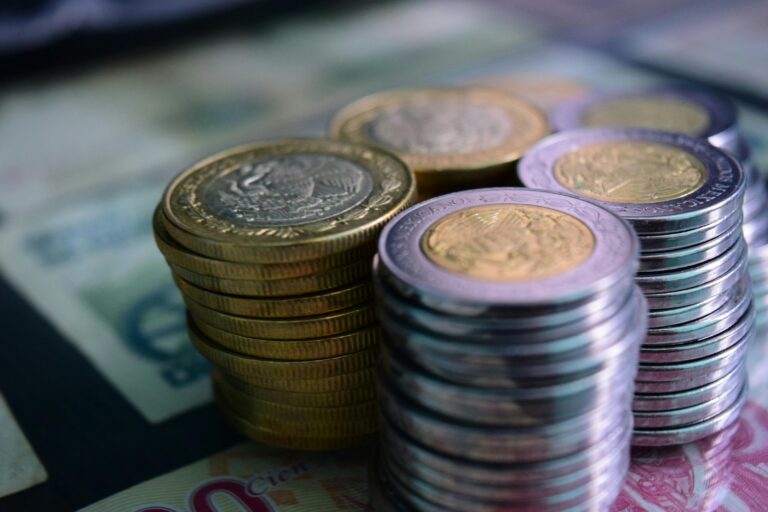
Foreign currency investment can offer investors an opportunity to diversify their portfolios, gain exposure to growing economies and potentially benefit from movements in exchange rates. However, currencies can move quickly in response to economic, political and global events, making it important to approach foreign currency investment with research rather than speculation. Finding the right foreign currency investment begins with understanding what drives the value of a currency and determining whether the opportunity fits your financial goals, investment horizon and tolerance for risk.

Understand What You Are Investing In
Investing in a foreign currency is different from simply exchanging money before travelling. An investor is effectively taking a position on how one currency may perform relative to another. For example, someone holding British pounds who invests in US dollar-denominated assets has exposure to movements between the pound and the dollar. Even when the underlying investment performs well, changes in the exchange rate can increase or reduce the investor’s eventual return. This means that investors should consider two things: the quality of the investment itself and the potential movement of the currency in which it is denominated.
Look at the Strength of the Economy
A country’s economic condition can have a significant influence on its currency. Before investing, examine indicators such as economic growth, inflation, employment, government debt, trade performance and consumer confidence. A growing economy does not automatically mean that its currency will appreciate, but understanding these indicators provides useful context. Investors should also consider the country’s longer-term economic prospects. Is the economy becoming more productive and competitive? Is it attracting international investment? Is it heavily dependent on a single commodity or industry? These questions provide a broader picture than simply looking at today’s exchange rate.
Pay Attention to Interest Rates and Inflation
Central banks play an important role in currency markets. Decisions about interest rates can affect how attractive a currency is to international investors. Higher interest rates can sometimes increase demand for a currency because investors may seek better returns on deposits and fixed-income investments. However, the relationship is not always straightforward. Very high interest rates may also indicate serious inflation or economic instability. Inflation is equally important. Persistent high inflation reduces purchasing power and can place downward pressure on a currency over time. Investors should therefore examine interest rates alongside inflation rather than treating either indicator in isolation.
Consider Political and Institutional Stability
Currencies respond not only to economics but also to politics. Elections, conflicts, changes in government policy, trade disputes, sanctions and political instability can significantly affect investor confidence. Countries with credible institutions, predictable economic policies and relatively stable political environments may present different currency risks from countries experiencing frequent policy changes or political uncertainty. Before investing, consider what could realistically change within the country during your intended investment period.
Decide How You Want to Gain Currency Exposure
Buying physical foreign currency is only one way of gaining exposure. Depending on the investor’s circumstances and jurisdiction, foreign currency exposure may also come through foreign-currency bank accounts, international bonds, overseas shares, funds, exchange-traded funds and other financial instruments. For example, an investor who believes strongly in the long-term prospects of the US economy may decide that investing in carefully selected US assets is more appropriate than simply holding dollars. The important question is not merely, “Which currency should I buy?” but “What investment gives me the most appropriate exposure to this currency and economy?”
Understand Currency Pairs
Currencies are valued relative to other currencies. This is why foreign-exchange markets use currency pairs such as GBP/USD, EUR/USD or USD/JPY. Suppose GBP/USD is 1.30. Broadly, this means £1 buys approximately US$1.30. If the pound strengthens against the dollar, the exchange rate changes accordingly. For an investor, the relevant question is therefore not simply whether the dollar is “strong”. It is whether the dollar is likely to strengthen or weaken relative to the investor’s home currency during the investment period.
Do Not Chase a Currency Because It Is Rising
One of the biggest mistakes investors can make is entering an investment simply because its recent performance looks impressive. A currency that has appreciated considerably may already reflect much of the positive economic information available to the market. Likewise, a currency that has fallen sharply is not automatically a bargain. Ask why the movement occurred and whether the conditions responsible for it are likely to continue. Successful investing requires separating a genuine long-term opportunity from short-term market excitement.
Calculate the Real Cost of Investing
Exchange rates displayed online are not necessarily the rates an investor will receive. Banks, brokers and money-transfer providers may charge transaction fees or incorporate a margin into their exchange rates. Some investments also carry management, trading, custody or withdrawal fees. Imagine converting £10,000 into another currency, investing it and later converting the proceeds back into pounds. Your real return will depend on the investment performance, currency movement, transaction costs, applicable taxes and other fees. These costs should be calculated before committing capital.
Diversify Instead of Betting Everything on One Currency
Currency movements are difficult to predict consistently. Concentrating a large proportion of wealth in one foreign currency can therefore create significant risk. Diversification can reduce dependence on the performance of one country, currency or economic environment. Depending on an investor’s circumstances, this could mean spreading investments across different geographical markets, currencies and asset classes. The objective is not to find one “perfect” currency. It is to construct a portfolio capable of performing across different economic conditions.
Know Your Reason for Investing
Before purchasing any foreign currency investment, be able to answer a simple question: Why am I making this investment? Perhaps you are diversifying your savings, preparing for future expenses in another country, investing internationally, protecting against weakness in your domestic currency or pursuing long-term capital growth. Your purpose should influence your strategy. Someone saving for university fees in the United States has a fundamentally different reason for holding dollars from someone attempting to profit from short-term movements in the foreign-exchange market. The appropriate level of risk will therefore be different.
Think Long Term and Manage the Risk
Foreign currency investment should form part of a wider financial strategy rather than becoming a gamble on the next exchange-rate movement. Before investing, consider how much you can afford to lose, how long you intend to remain invested and what circumstances would cause you to reconsider the investment. Investors should be particularly cautious with leveraged foreign-exchange trading, where relatively small currency movements can produce disproportionately large losses. The strongest approach combines economic research, diversification, disciplined risk management and a clear understanding of personal financial objectives.
The Bottom Line
Finding the right foreign currency investment is less about predicting which currency will suddenly rise and more about understanding the economies, institutions and investments behind those currencies. Research economic fundamentals. Follow central-bank decisions. Understand inflation and interest rates. Consider political risk. Calculate transaction costs. Diversify your exposure and, above all, understand why the investment belongs in your portfolio. Foreign currencies can provide useful opportunities within a diversified investment strategy, but they also introduce risks that should not be underestimated. A good investment decision is therefore not simply about finding a strong currency. It is about finding an appropriate investment, at an acceptable level of risk, that supports your wider financial goals.
This article is for general educational purposes and does not constitute financial or investment advice.
For more articles, visit OD Blog.
