
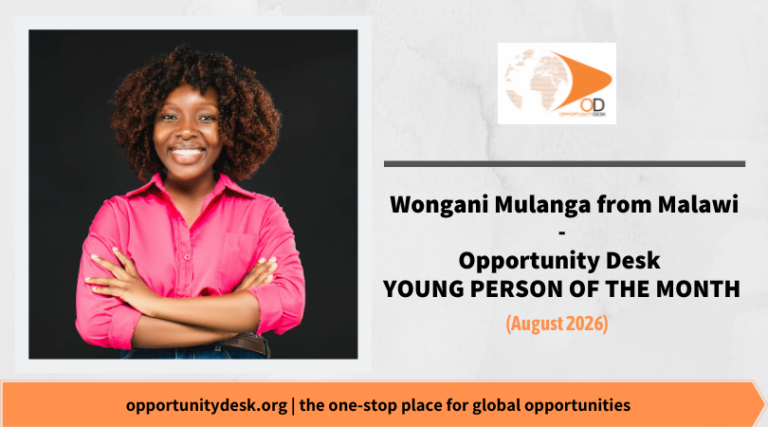
Wongani Mulanga is a Malawian Environmental Scientist and the Co-Founder and Executive Director of Green Minds Malawi, a youth-led organisation working at the intersection of climate education, clean energy access, and community engagement. She also runs Her Climate Lab, a girl-led climate education programme at a secondary school in Mangochi.
Background and Work


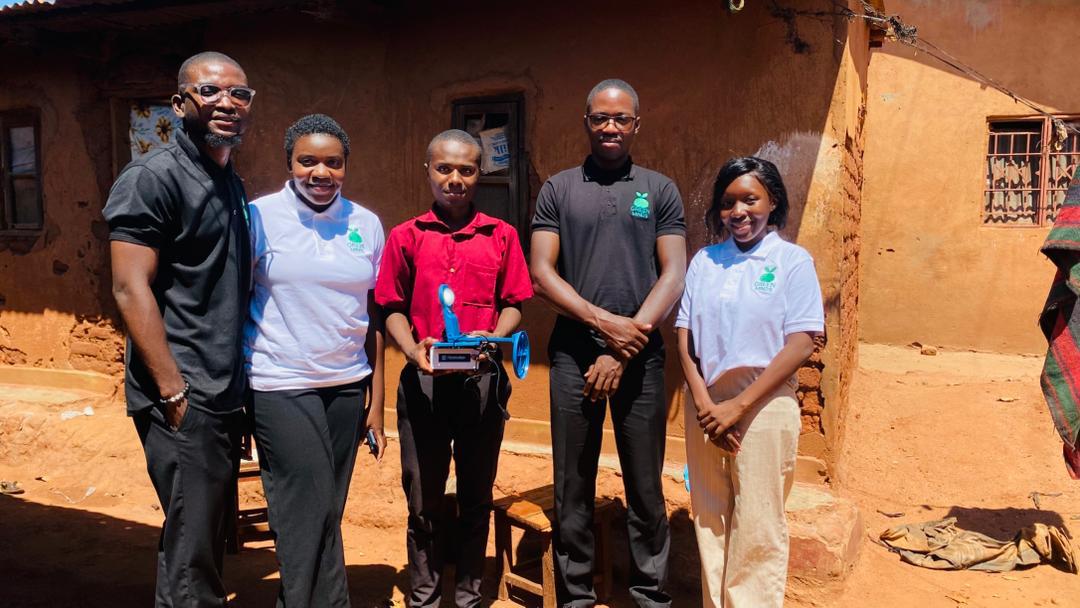
Growing up, Wongani watched students around her work hard with very little to show for it, not because they lacked ability, but because they lacked electricity to study by, resources to learn with, and spaces that reflected their potential back at them. She carried that observation through school and into university, and when she finished her BSc in Environmental Science, she decided she was not going to wait for a job before doing something about it. Together with three other young people, she co-founded Green Minds Malawi and launched the Green Ed Initiative almost immediately after finishing university. Green Ed is built on the conviction that educational inequality and environmental degradation share the same root. Students studying by kerosene lamp are breathing harmful fumes and falling behind academically because the light is poor, and both problems have the same solution. Through the initiative, Green Minds distributes solar lamps to students from households without reliable electricity, works with schools to establish environmental clubs, introduces waste management through bin donations and clean-up campaigns, and plants trees. Young people are treated as thinkers who are already part of the climate story, not as passive recipients waiting to be educated. The initiative has engaged over 100 students across four partner schools, three primary schools and one secondary school, through environmental education, club activities, and clean energy access. The work has also extended beyond Green Minds. Through Her Climate Lab, Wongani facilitated a session on solar energy and clean technology with a group of young women studying at a secondary school in Mangochi, connecting climate science to the energy choices their families make every day.
How It Started
There was no single dramatic moment, it was just an accumulation of things observed over years, students relying on kerosene to read at night, environmental issues treated as secondary in communities already carrying too many burdens, young people left out of conversations about changes affecting their lakes, their farms, and their futures. What pushed Wongani to act was recognising that the gap was not in awareness. Most people already know the environment is under pressure. The gap was in practical tools and platforms that would allow young people to do something about it, and she did not want to be someone who wrote reports about that gap without trying to close it.
Successes So Far
Green Minds has distributed solar lamps to students from households without electricity, enabling them to study at night while adopting clean energy in ways that feel personal and immediate rather than abstract. Four school partnerships have produced environmental clubs, clean-up campaigns, waste management initiatives, and tree planting activities. The organisation has also been documenting climate stories from communities living on the shores of Lake Malawi, capturing flood experiences and recovery through its Climate Witness project.
Challenges and How They Were Faced
Like most youth-led startups, the hardest thing has been funding. Green Minds is still largely self-funded, with the founding team working voluntarily and relying on personal contributions alongside a small pool of dedicated volunteers to keep operations running. There is no comfortable budget to fall back on, and every activity requires finding creative ways to make limited resources go further. The team has navigated this by being deliberate about commitments, only promising what can actually be delivered, and building partnerships that contribute in-kind where cash is not available. The other challenge has been fair distribution of lamps. School-level recommendations do not always reflect household realities, because favouritism and limited information mean that the students who need support most are not always the ones put forward. Green Minds responded by introducing household visits before distribution decisions are made, so the team sees conditions directly rather than relying on second hand nominations.
Plans for the Future
The goal is to expand Green Ed to more schools across Malawi, prioritising districts where energy poverty and limited environmental education overlap most. An instalment-based model for lamp access is being developed so that students whose households can contribute something can do so over time, making the programme more financially sustainable without removing the full donation model for those who cannot contribute at all.
Words of Advice for Young Changemakers
Do not wait until conditions feel right, because they rarely do. Start where you are, stay close to the communities your work is meant to serve, and find at least one person who believes in what you are doing but will also tell you the truth when something is not working. Proximity and honesty are what make impact last beyond a single project or funding cycle.
Connect to Wongani here, LinkedIn | Instagram | Facebook
You can be the next Opportunity Desk Young Person of the Month! All you have to do is get a friend to recommend your work or fill out the nomination form here. We want to use the platform to recognize and celebrate the efforts of amazing young people around the world. Oh! And you must be an active Opportunity Desk member, either as a fan, reader, or subscriber! Share!
Read about previous YPOMs here.
