
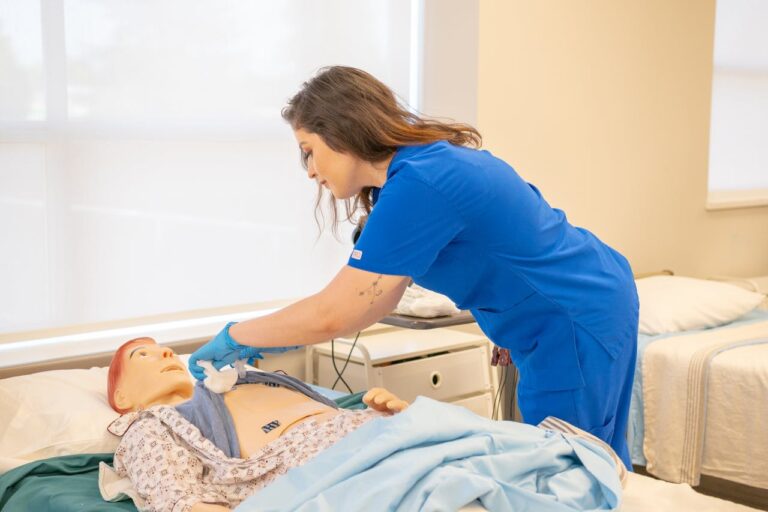
If you’ve been nursing for a few years with an ADN and keep hearing that the BSN matters, you’re not imagining it. The credential has moved from “preferred” to “expected” at a growing number of health systems, and the professional case for earning it has gotten stronger, not softer, over the past decade. This isn’t about chasing a piece of paper. It’s about understanding what the degree actually changes — in hiring, in practice, and in where your career can go from here.
The BSN Changes How Employers See You Before You Walk In the Door

Magnet-designated hospitals and large academic medical centers have been the most visible drivers of BSN-preferential hiring, but the trend has spread well beyond that category. Many mid-sized regional health systems now list the BSN as a preferred or required credential for staff nurse positions, and that preference gets more pronounced the higher up the ladder you go.
For nurses already working with an ADN, this doesn’t necessarily mean your current job is at risk. What it does mean is that the next position — whether that’s a promotion, a move to a new facility, or a lateral shift into a specialized unit — may hit a credential ceiling you didn’t anticipate. Completing an online RN to BSN program while continuing to work is how most ADN nurses are resolving that gap without interrupting their income or their career momentum.
The Curriculum Fills Gaps That Clinical Training Alone Doesn’t Cover
ADN programs do an efficient job preparing nurses for direct patient care. What they don’t have room for — given the compressed timeline — is the broader academic content that the BSN builds in. That includes nursing research and evidence-based practice, public and community health, leadership and healthcare systems, and health policy context that shapes how care is delivered at the organizational level.
This matters more than it sounds in day-to-day practice. Nurses with BSN preparation tend to be more confident interpreting clinical research, more equipped to participate in quality improvement initiatives, and better positioned to understand the institutional forces that affect patient outcomes. These aren’t abstract academic skills — they show up in how nurses communicate with interdisciplinary teams, advocate for patients, and contribute beyond their immediate assignment.
It’s the Gateway Credential for Every Advanced Practice Role
If there’s any possibility you’ll want to pursue graduate study — whether that’s becoming a nurse practitioner, a certified nurse midwife, a clinical nurse specialist, or moving into nursing education or administration — the BSN is a non-negotiable prerequisite. MSN and DNP programs don’t admit applicants without it, and there’s no alternative pathway or waiver process that substitutes for the degree.
This catches some nurses off guard. They spend several years in practice, develop a clear sense of where they want to specialize, and then discover that graduate school requires going back for the BSN first. Planning for that earlier rather than later compresses the overall timeline and keeps the door to advanced practice open while you’re still building clinical experience.
Patient Outcomes Research Has Entered the Conversation
The link between BSN-prepared nursing workforces and patient outcomes has been studied more rigorously over the past two decades than most nurses realize. Research published in journals like the Journal of Nursing Administration and Health Affairs has found associations between higher proportions of BSN-educated nurses on hospital units and lower rates of patient mortality, failure-to-rescue, and hospital-acquired complications.
These findings haven’t gone unnoticed by hospital administrators and accrediting bodies. They’ve contributed directly to the institutional push toward BSN-preferred hiring standards. For nurses who want to understand why the credential conversation keeps gaining momentum, this body of research is part of the explanation.
The Logistics Have Gotten More Manageable
The argument against the BSN used to be largely practical: the time, the cost, the disruption to an already demanding work schedule. Those barriers haven’t disappeared, but they’ve shrunk considerably. Online BSN completion programs designed specifically for working RNs have made it possible to finish the degree in twelve to eighteen months in many cases, without relocating or reducing hours.
Tuition assistance through employers has also become more common, particularly at health systems actively working toward Magnet designation or trying to raise their BSN workforce percentage. Nurses who haven’t checked whether their employer offers education benefits recently may find the financial picture is more favorable than they assumed.
The degree takes work. But the window to complete it on your own terms — while keeping your job, your schedule, and your paycheck — is wider than it’s ever been.
For more articles, visit OD Blog.
