
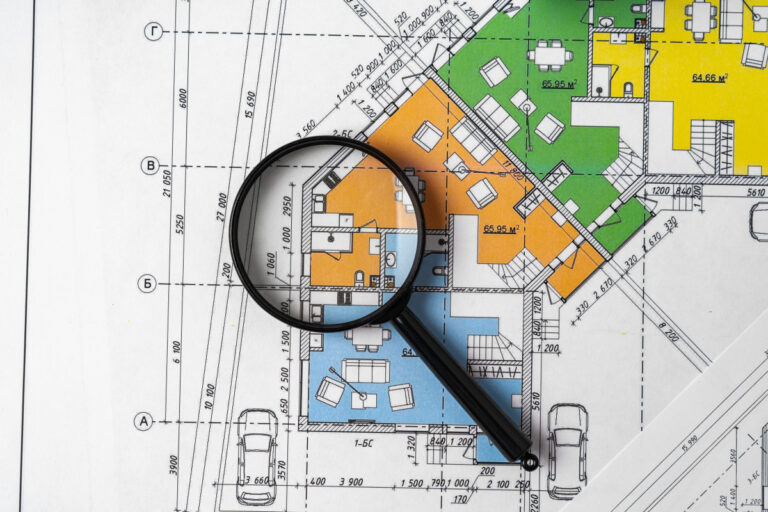
A venue can impress at first sight and still lose people three minutes later. That is often where the visitor experience breaks down : not at the ticket desk, not at the café, but in the simple act of finding the right room, gate, stand or service. Indoor mapping changes that fragile moment, and when it is deployed well, it does more than prevent frustration : it reshapes how people move, discover and remember a place.
When visitors stop guessing, they start enjoying
Large venues rarely suffer from a lack of attractions. They suffer from friction. A convention centre may offer dozens of talks, lounges and services, a hospital may organise critical journeys across several buildings, and a stadium may welcome tens of thousands of people in a narrow time window, yet the same problem keeps surfacing : once visitors pass the entrance, too many of them are left to decode the space alone.
That confusion has a cost. It creates stress, slows circulation and sends people to staff for routine directions instead of meaningful support. It also changes behaviour. Visitors who feel lost tend to shorten their visit, skip secondary areas and ignore services they would otherwise have used. Research on indoor wayfinding in complex environments has repeatedly shown that navigation is not a minor convenience, but a central part of how users experience a place, especially when the setting is unfamiliar or cognitively demanding, as highlighted in this review on indoor wayfinding and user experience.
Indoor mapping turns that weak point into a service layer. A dynamic map on mobile, kiosk or web lets people understand where they are, what sits nearby and how to reach it without hesitation. That alone improves comfort, but the deeper shift is psychological : visitors feel in control. They trust the venue more because the venue feels readable.
For operators, that clarity opens the door to smarter journeys. Routes can highlight accessible paths, rest areas, elevators or nearby amenities, and a solution such as Visioglobe can help transform a static floor plan into a navigable experience that supports both efficiency and discovery. In practical terms, indoor mapping makes the venue easier to use; in emotional terms, it makes the venue easier to enjoy.
Better navigation also unlocks revenue and inclusion
People do not only visit venues to arrive somewhere. They browse, compare, pause, improvise and change plans. That is why indoor mapping has strategic value far beyond orientation. When visitors can move confidently, they are more likely to explore an extra hall, stop at a food outlet, find a sponsor area, return to a missed exhibit or extend their stay instead of cutting it short.
This matters in every sector. In retail-led destinations, better navigation can expose visitors to stores and services they might never have noticed. In cultural venues, it can connect major attractions with overlooked rooms and reduce the fatigue that often limits deeper exploration. In transport hubs, it can lower missed connections and reduce crowding around decision points. In event venues, it can smooth peak flows while giving attendees a better shot at finding the experiences they actually came for.
The most effective systems also improve inclusion, which is no longer a side issue. Visitors need routes that match real-life constraints : step-free access, shorter walking distances, quieter paths, clearer instructions and interfaces that remain usable under pressure. The broader principle is well established by the W3C’s accessibility guidance : digital tools should be designed so people can perceive, understand, navigate and interact with them effectively. Indoor mapping applies that principle to physical space.
That is why the technology now sits at the intersection of hospitality, operations and data. It helps visitors find their way, and it helps operators understand where friction persists. Which entrances create bottlenecks ? Which amenities remain invisible ? Which routes fail at peak hours ? Once a venue can answer those questions, the map stops being just a map. It becomes part of the visitor strategy.
The smart venue advantage
Indoor mapping works best when it is treated as infrastructure, not decoration. Visitors notice the difference quickly : fewer dead ends, faster decisions, calmer movement and a venue that feels designed for people rather than imposed on them. For operators, the practical gains are just as clear : better flow, stronger engagement, more visible services and a more inclusive experience from entry to exit.
For more articles, visit OD Blog.
